Linear algebra
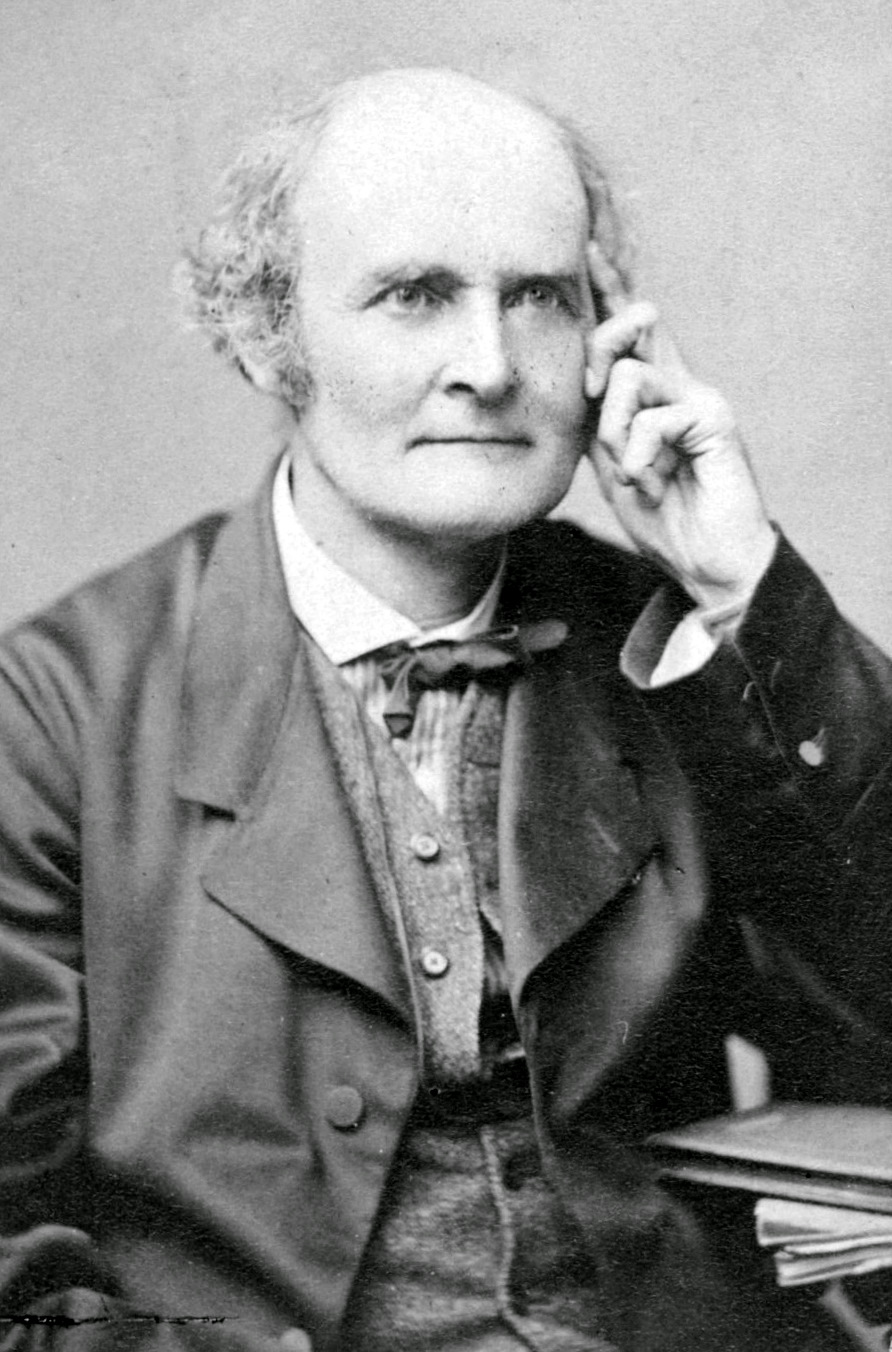
The mathematics of straight-line relationships in many dimensions at once — vectors, and the rectangular arrays called matrices that transform them. Arthur Cayley's step was to treat a whole array as a single object you can add, multiply, and invert as if it were a number.
L'archive profonde est pour l'instant rédigée en anglais — des traductions vérifiées font partie de la feuille de route. La fonction de traduction de votre navigateur fonctionne bien sur cette page.
✦ Attendez, vraiment ?
The computational heart of the subject is far older than the algebra around it. The Chinese Nine Chapters on the Mathematical Art, compiled by about the 1st century BC, solves systems of linear equations by precisely the row-reduction we now call Gaussian elimination — roughly 1,900 years before Gauss — laying the coefficients out as a grid of counting rods, red for positive and black for negative. To run the method, Chinese mathematicians computed openly with negative numbers, which European mathematicians still dismissed as absurd into the 1600s.
Ce que c'est
"Linear" means built only from scaling and adding — nothing bent, nothing squared. A vector is a list of numbers, or equivalently an arrow in space; a matrix is a rectangular array that maps vectors to vectors, encoding a rotation, a projection, a shear — and, read another way, the coefficient table of a system of linear equations. In his 1858 *A Memoir on the Theory of Matrices*, Arthur Cayley defined how to add and multiply these arrays as objects in their own right. Matrix multiplication turns out to *compose* transformations, and — a genuine surprise — it does not commute: in general AB is not BA, because doing one motion then another is not the same as reversing the order. Cayley also stated what is now the Cayley–Hamilton theorem: every matrix satisfies its own characteristic equation.
Pourquoi cela a compté
Two ancient problems fused into one language. The first is solving many linear equations together — a practical need as old as taxation and surveying. The second is representing transformations of space as things you can calculate with and chain. Once both are matrices, geometry and equation-solving become the *same* arithmetic, and a single toolkit — rank, determinant (older than matrices: Leibniz, Seki, Cramer), eigenvalues, eigenvectors — governs both. Because calculus approximates almost anything as "locally linear," this becomes the layer where the smooth, curved world is handled one flat piece at a time.
Ce que cela a débloqué
Linear algebra is the everyday language of applied mathematics. Heisenberg's 1925 matrix mechanics recast quantum theory as linear algebra on infinite-dimensional spaces. Least-squares fitting — the backbone of regression and statistics — is a matrix computation. Every rotation, projection, and perspective in computer graphics is a matrix. Google's original PageRank ranked the web as the dominant eigenvector of a giant link matrix, and the layers at the core of modern neural networks are, arithmetically, matrix multiplications by the billion. The array Cayley taught us to treat as a single number is now the unit of computation for much of science.
Cette fiche attend encore son récit complet — les cartographes sont à l'œuvre. Sa place dans le graphe est déjà vérifiée.
A débloqué
Frontière — rien de cartographié encore.
Quelque chose d'inexact sur cette page ? Chaque affirmation ici est censée survivre à la contestation. Suggérer une correction →